Thinking about getting an African fat-tailed gecko? This page will help you decide whether this species is right for you by covering its temperament, care requirements, time commitment, and the responsibilities of ownership.
Reptile keeping
The African fat-tailed gecko is becoming an increasingly popular species within the reptile hobby. Thanks to its calm temperament, relatively straightforward care requirements, and beautiful appearance, it is often recommended for both beginner and experienced reptile keepers. However, that does not mean it is the right choice for everyone.
Keeping an African fat-tailed gecko is very different from keeping a dog, cat, or small mammal. These are animals that are best appreciated through observation, allowing you to enjoy their natural behaviors and unique personalities. Before deciding to bring one home, it is important to consider whether this style of pet keeping suits your expectations and lifestyle.
How much care does an African fat-tailed gecko need?
The African fat-tailed gecko is often considered a relatively easy reptile to care for. However, this does not mean that it requires little time or attention. Like any other pet, an African fat-tailed gecko needs consistent daily care to remain healthy and thrive in captivity.
Fresh drinking water should be provided daily, and the gecko should be briefly observed to ensure it is behaving normally. Regular observation makes it easier to detect changes in behavior, appetite, shedding, or overall health at an early stage. On average, the daily care of an African fat-tailed gecko takes only a few minutes.
In addition to daily care, the enclosure also requires regular maintenance. Feces and uneaten food should be removed promptly, and the water dish should be cleaned thoroughly on a regular basis. If live plants are used, they will also require routine care. To maintain appropriate humidity levels, the enclosure should be lightly misted approximately twice a week. Adult African fat-tailed geckos are typically fed twice a week. Before feeding, feeder insects should be dusted with a calcium supplement. Feeding and misting together generally require around 15 to 30 minutes per week. Hatchlings and juvenile geckos require more frequent feeding and misting than adults and are therefore slightly more time-consuming to care for.
Although daily care usually takes only a few minutes, successfully keeping an African fat-tailed gecko is primarily about consistency. Maintaining a well-designed enclosure and following a regular care routine are far more important than spending large amounts of time with the animal. When provided with the proper environment and consistent care, the African fat-tailed gecko is considered a relatively low-maintenance reptile.
What is it like keeping an African fat-tailed gecko?
African fat-tailed geckos are well known for their calm and gentle temperament. Unlike many other reptiles, they rarely respond aggressively and will usually retreat when they feel threatened. However, they are naturally quite shy animals. During the day, they spend most of their time hidden away in burrows, beneath hides, or inside termite mounds. As dusk approaches, they become active, emerging from their shelters to explore their surroundings, hunt for insects, dig, and climb through the enclosure.
Although African fat-tailed geckos become accustomed to the presence of their keeper over time, every gecko has its own unique personality. Some individuals regularly emerge from their hides when the enclosure is opened or at feeding time, while others prefer to remain in the background. These individual differences in behavior are part of what makes each African fat-tailed gecko unique.
If you enjoy observing subtle behaviors and getting to know an animal's individual personality, you will likely find keeping an African fat-tailed gecko to be a highly rewarding experience.
Feeding an African fat-tailed gecko
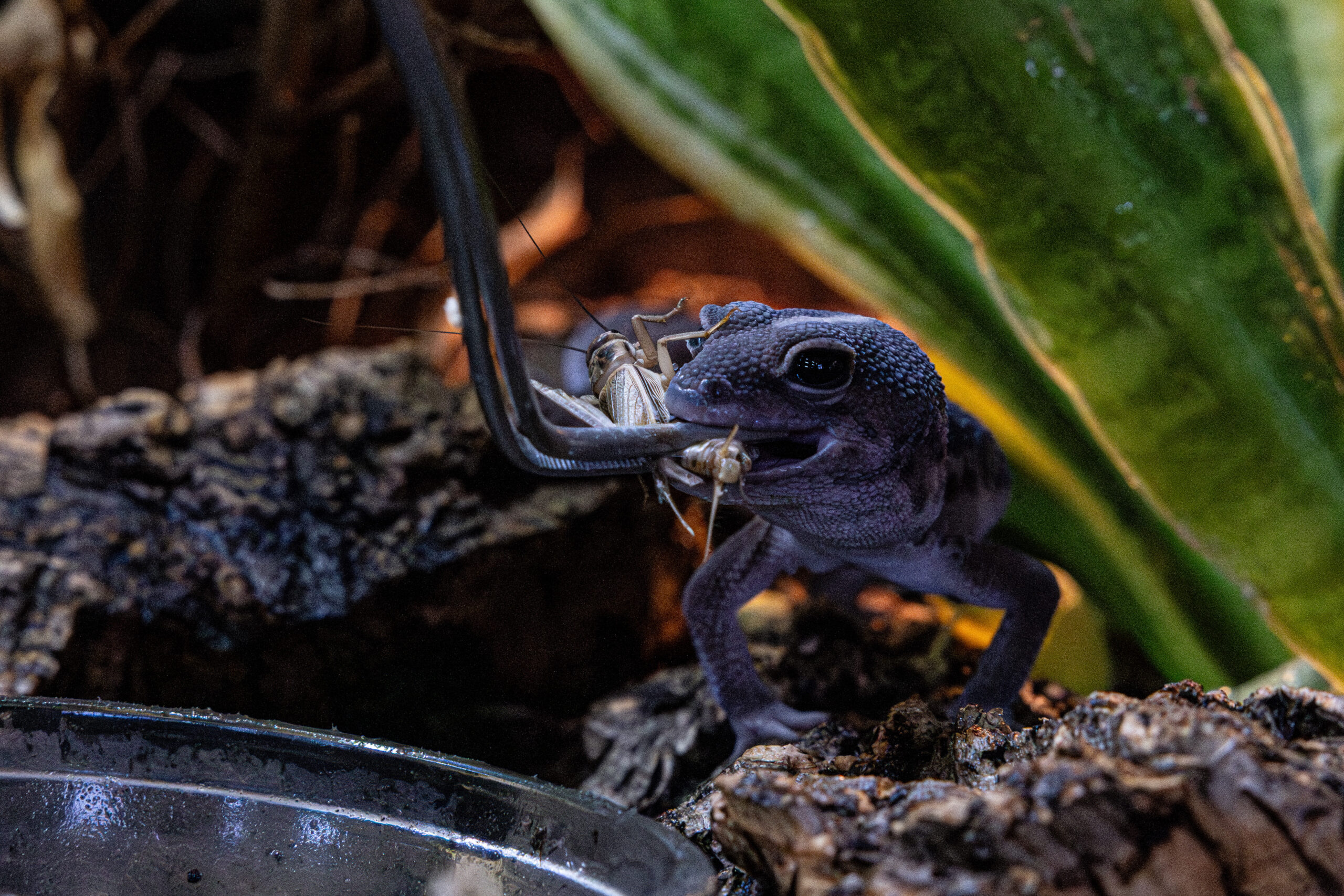
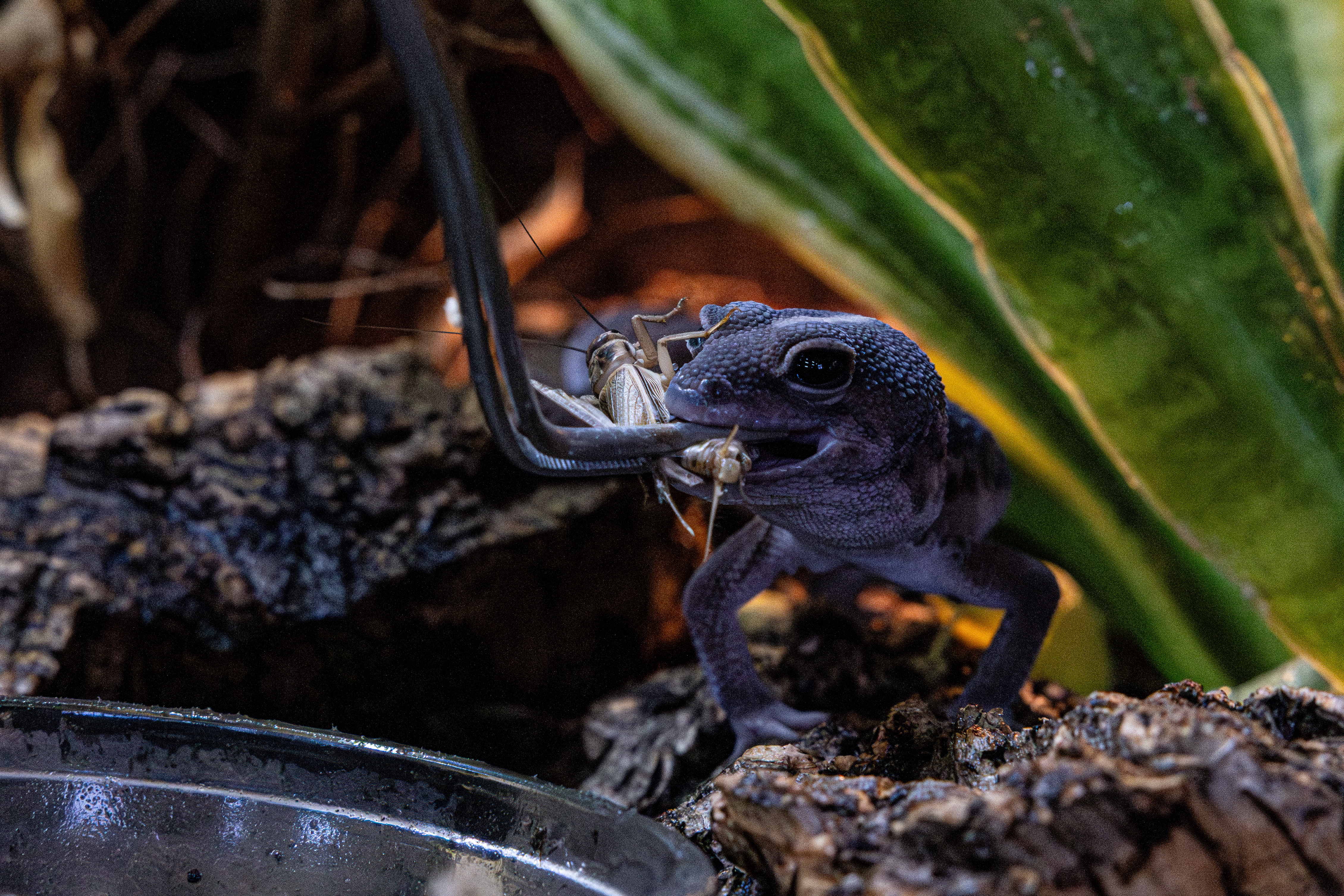
African fat-tailed geckos are true insectivores. Their diet consists of live feeder insects such as crickets, locusts, and Dubia roaches. These feeder insects should also be properly cared for by providing them with a nutritious diet (gut-loading) before they are offered to the gecko, ensuring they provide the highest possible nutritional value.
Not everyone feels comfortable keeping live insects. If you are uncomfortable with feeding or maintaining live feeder insects, it is worth considering whether an insectivorous reptile is the right choice for you.
The enclosure of an African fat-tailed gecko
You don't just buy an African fat-tailed gecko, you are also creating an entire habitat for it. Keeping this species means investing in a well-designed enclosure that closely replicates its natural environment.
Contrary to what many people expect, African fat-tailed geckos do not live in the desert. Their natural habitat consists of savannas, grasslands, and dry forests with abundant vegetation, leaf litter, fallen branches, and a variety of natural hiding places.
As a result, an African fat-tailed gecko enclosure often looks much greener and more densely planted than a traditional desert terrarium. Live plants, cork bark, leaf litter, branches, and a natural substrate not only create an attractive display but also encourage the gecko to express its natural behaviors.
If you enjoy lush, subtropical terrariums, the African fat-tailed gecko is likely an excellent choice. However, if you prefer a desert-style terrarium with sand, rocks, and sparse vegetation, a species native to true desert environments may be a better match for your personal preference.
Is an African fat-tailed gecko beginner friendly?
Yes, but only if you are willing to do proper research beforehand.
The African fat-tailed gecko is considered a suitable reptile for beginner keepers because its care requirements are relatively straightforward and the species is generally calm and docile. However, this does not mean that it requires little care. Like all reptiles, African fat-tailed geckos depend entirely on the correct temperature, humidity, nutrition, and enclosure setup to thrive. Compared to some other commonly kept gecko species, such as the leopard gecko, African fat-tailed geckos are generally more sensitive to fluctuations in environmental conditions. Incorrect humidity, temperature, or husbandry can increase the risk of health problems, making consistent care and a well-maintained enclosure especially important.
Those who take the time to thoroughly research the species and fully set up the enclosure before bringing their gecko home will provide the foundation for a healthy animal that can thrive for many years.
A long-term responsibility
With proper care, an African fat-tailed gecko can live for 15–20 years. This means you are making a long-term commitment and accepting responsibility for its housing, nutrition, and overall health for many years to come.
In addition to purchasing the gecko itself, setting up the enclosure also requires an initial investment. Proper heating, lighting, a reliable thermostat, a naturalistic enclosure setup, and high-quality feeder insects are all essential for maintaining a healthy animal. You should also budget for ongoing expenses, including feeder insects, dietary supplements, electricity, replacement equipment, and potential veterinary care.
An African fat-tailed gecko is not an impulse buy, but a pet that needs long-term care.
Find out whether an African fat-tailed gecko is the right pet for you!
Learn everything about the care, behavior and habitat of the African fat-tailed gecko.