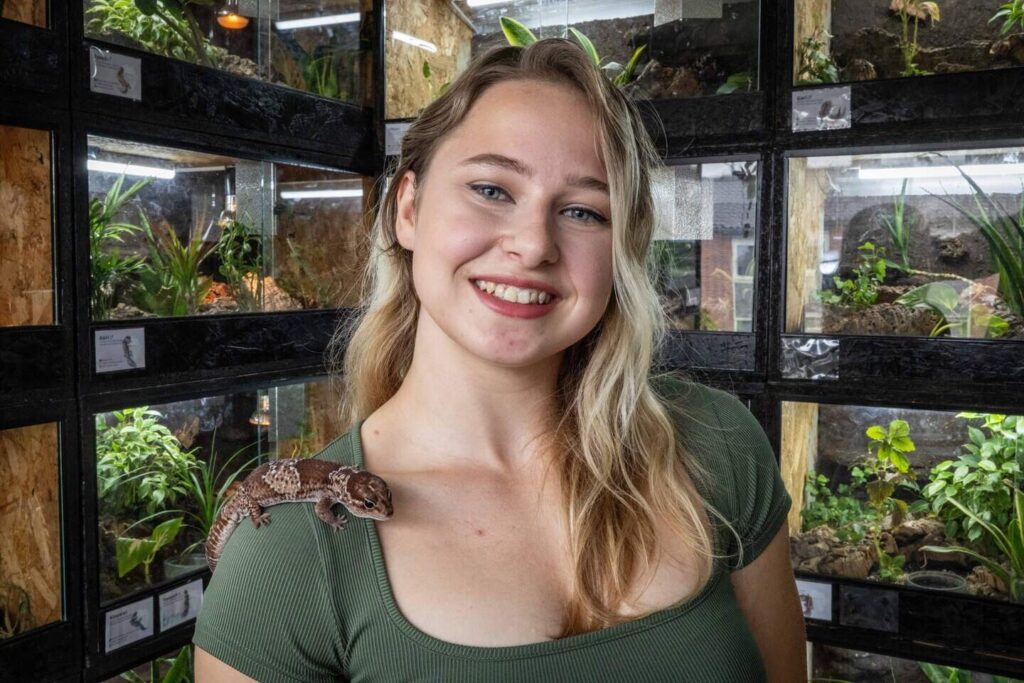
Hi! My name is Marije, the founder of Dutch Fattails.
Welcome to Dutch Fattails! Behind this website is a story that began with a single African fat-tailed gecko and grew into a passion for this remarkable species. Over the years, I have learned an incredible amount about their care, health, natural habitat, and genetics, and I love sharing that knowledge with fellow enthusiasts. But before Dutch Fattails existed, it all started with my very first African fat-tailed gecko: Akiiki.
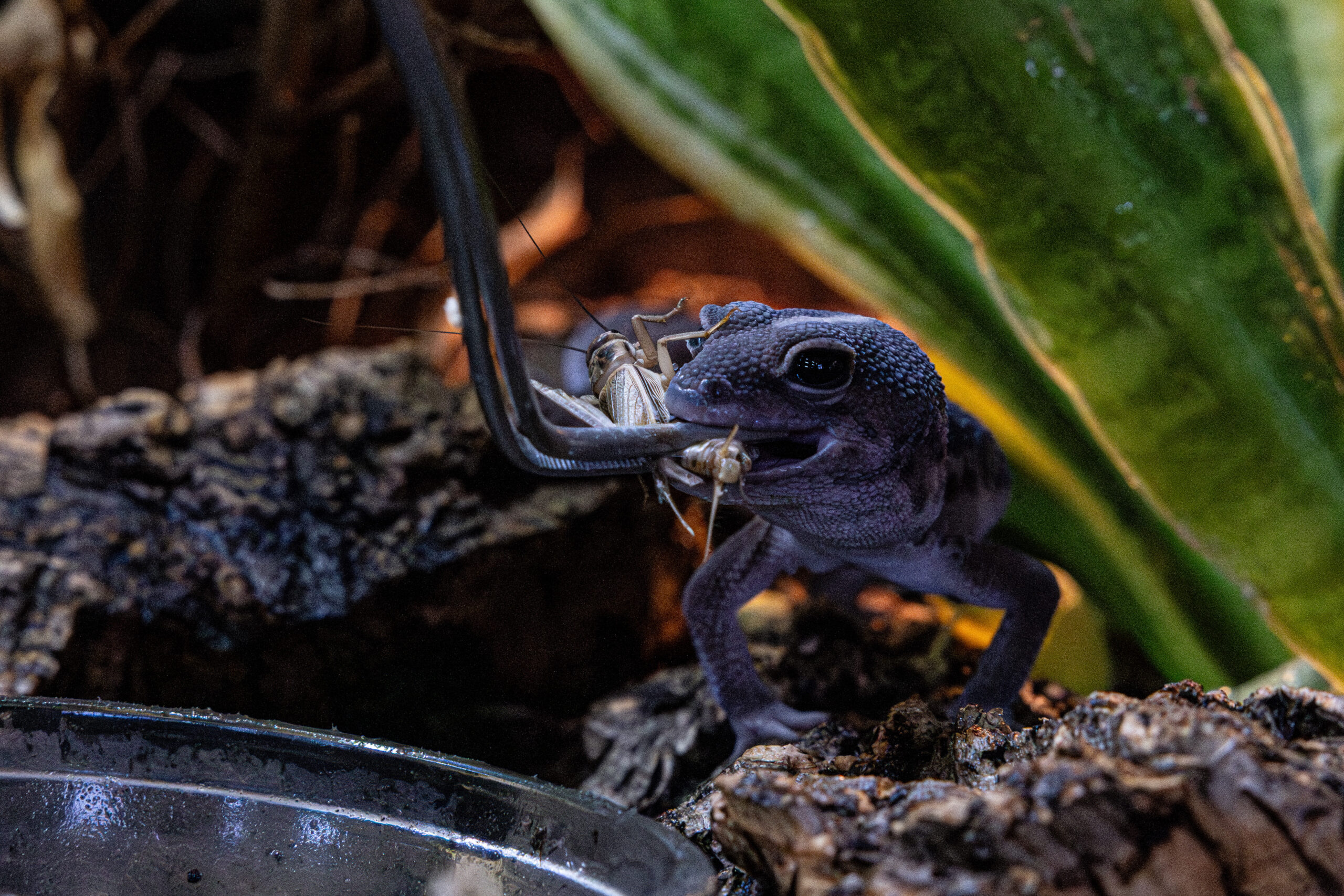
My fascination with reptiles began at a young age. As a child, I devoured books about dinosaurs and was always fascinated by the reptiles I saw on television or in pet stores. When I was about six years old, I saw a bearded dragon in a pet store for the first time. I instantly fell in love and wanted to take it home right away. Unfortunately, that wasn't possible at the time, so I had to wait several more years before getting my first reptile. Everything changed when I started college and completed an internship at a reptile store. There, I was responsible for the daily care and feeding of the reptiles. One day, I watched an African fat-tailed gecko hunting a cricket. Just before striking, it began wagging its tail enthusiastically. That small moment made such an impression on me that I immediately knew this would be my first reptile.
By then, I was old enough to take full responsibility for caring for a reptile, so I was finally able to get my very first one. Not long afterwards, I came home with my first African fat-tailed gecko, Akiiki. Little did I know at the time that Akiiki would eventually become the foundation of everything Dutch Fattails is today.
From one gecko to a passion
What started with a single gecko quickly grew into a true passion. I wanted to learn everything I could about this fascinating species. I explored their natural habitat in West Africa, delved into the available literature, studied their behavior, and experimented with naturalistic enclosure designs that replicate their natural environment as closely as possible.
Soon, more African fat-tailed geckos joined the collection, and I became increasingly interested in genetics and responsible breeding. I noticed that many wild-caught animals were still being offered for sale, which I felt was unethical. It made me wonder: surely there must be a better way? That motivated me to learn more about breeding African fat-tailed geckos, from their behaviour and husbandry to genetics. As my collection grew, I quickly discovered that every African fat-tailed gecko has its own personality. Some are curious and confident, while others are incredibly shy. It is precisely these individual differences that make the species so special to me, and what makes keeping and breeding them so rewarding.
Why just African fat-tailed geckos?
People often ask why I chose to dedicate myself to just one reptile species. The answer is simple: I enjoy truly getting to know one species rather than knowing a little about many.
There are thousands of reptile species, but the more I learn about the African fat-tailed gecko, the more I realize there is still so much to discover. By dedicating myself to this single species, I can continue to deepen my understanding of their behaviour, health, nutrition, genetics, and natural habitat. That is what keeps it so fascinating to me. I am always looking for ways to improve the care I provide and to better understand the needs of my geckos. I know every single one of them by name, and each has its own unique personality. To me, they are all equally special. There simply isn't another reptile species that inspires the same passion in me as the African fat-tailed gecko.
Why Dutch Fattails?
When I first started keeping and breeding African fat-tailed geckos, I noticed that this incredible species was still relatively unknown within the reptile hobby. Compared to the much more popular leopard gecko, there are relatively few enthusiasts and breeders dedicated to African fat-tailed geckos. As a result, wild-caught animals are still regularly imported to meet the demand.
I also noticed that African fat-tailed geckos are often kept in rack systems, even though their natural habitat consists of densely vegetated savannas and dry forests with abundant cover, hiding places, and vegetation. Because of my background in animal management, I strongly believe that recreating a species' natural habitat plays an important role in promoting the welfare of animals in captivity.
That is why I started Dutch Fattails.
My goal is to raise awareness of the African fat-tailed gecko within the reptile hobby and inspire more people to discover this remarkable species. I hope that increasing interest in responsibly captive-bred animals will ultimately help reduce the demand for wild-caught imports. I also want to show that a naturalistic enclosure is not only beautiful to look at but also plays an important role in the welfare of the gecko. Through Dutch Fattails, I hope to inspire fellow keepers and breeders to provide environments that closely resemble the species' natural habitat.
I also found that reliable information about African fat-tailed geckos was surprisingly difficult to find. This is partly because relatively few people keep this species, but also because much of the available knowledge is limited and scattered across different sources.
My goal is to create one central resource where both new and experienced keepers can find reliable and up-to-date information about African fat-tailed geckos. On this website, I share my knowledge about care, housing, nutrition, health, genetics, and responsible breeding. I also aim to show how a naturalistic enclosure can contribute to the welfare of this beautiful species.
My vision
I believe that good husbandry starts with knowledge. The better we understand how a species lives in the wild, the better we can meet its natural needs in captivity. For me, animal welfare is always at the heart of everything I do.
My goal is not just to create beautiful terrariums, but to build environments where African fat-tailed geckos feel secure and are able to express their natural behaviors. To me, a terrarium is more than just an enclosure; it is a small piece of West Africa.
I hope Dutch Fattails inspires you to look beyond basic husbandry and helps you provide your African fat-tailed gecko with the most natural and healthy life possible. After all, that's exactly why Dutch Fattails came to life: one gecko that sparked a lifelong passion and a desire to share that passion with others.